Andhra Pradesh Makes Aadhaar Voluntary for Public Services
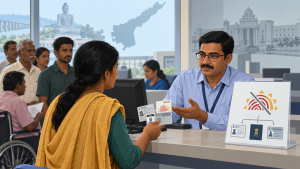
In September 2026, the Andhra Pradesh government issued orders making Aadhaar voluntary for government services, subsidies and welfare benefits. The directive covers 246 types of services across the state.
Alternative identification and service access
Applicants must be told that alternative identification cards can be used for identity verification, particularly at MeeSeva centres and other service registration points. The directive also applies to the issuance of disability certificates. No service or benefit may be denied solely because a person does not provide Aadhaar or Aadhaar verification fails.
Consent and data safeguards
When an applicant voluntarily provides Aadhaar, officials must obtain consent and explain how the details will be used and securely stored in an encrypted Aadhaar data vault under UIDAI norms. Complaints about denial of services for non-provision of Aadhaar may lead to departmental action against the officials responsible.
Important Facts for Exams
- Biometric record: Aadhaar links residents’ demographic details with biometrics—including a photograph, ten fingerprints and two iris scans—in a centralised database.
- Authentication modes: UIDAI introduced face authentication as an additional biometric method, supplementing fingerprint and iris authentication.
- Judicial limits: The Supreme Court upheld the Aadhaar Act’s validity in 2018 but ruled that Aadhaar could not be required for bank accounts, mobile connections or school admissions.
| Related | |
|---|---|