AIIMS Jodhpur Treats Four Children with Gelastic Epilepsy
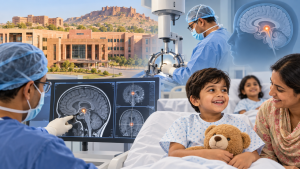
AIIMS Jodhpur in Rajasthan performed stereotactic radiofrequency ablation on four children with hypothalamic hamartoma, a condition associated with drug-resistant gelastic seizures, also known as laughing epilepsy. It was the first time this surgery had been performed in Rajasthan and made AIIMS Jodhpur the second AIIMS in India, after AIIMS Delhi, to offer the treatment.
Procedure and patient outcomes
The minimally invasive, computer-guided stereotactic frame-based technique targeted lesions deep in the brain through a small incision, avoiding open brain surgery. Before surgery, some children had 10 to 20 seizures daily. All four are now seizure-free, had no reported post-operative complications and were discharged within 48 hours.
Epilepsy surgery at AIIMS Jodhpur
AIIMS Jodhpur has operated a comprehensive epilepsy surgery programme since 2019 and has performed more than 100 epilepsy surgeries. Many were provided free of charge under Ayushman Bharat.
Important Facts for Exams
- MRI identification: MRI is the primary imaging method for detecting these hamartomas; their lack of contrast enhancement helps distinguish them from similar masses.
- Ablation mechanism: Radiofrequency ablation uses heat from medium-frequency alternating current to selectively destroy targeted dysfunctional tissue.
- Endocrine association: Some hypothalamic hamartomas cause central precocious puberty by activating pulsatile gonadotropin-releasing hormone secretion, independently of their epileptic manifestations.
- Deep seizure focus: Gelastic seizures arising from hypothalamic hamartomas often begin in infancy and may evade routine scalp EEG because their seizure generator is deep.
| Related | |
|---|---|