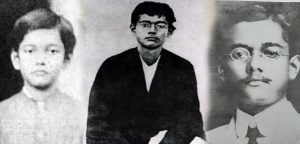
Subhas Chandra Bose (1897–1945) was one of the most prominent leaders of India’s struggle for independence. Renowned for his dynamic leadership, nationalism, and advocacy for complete freedom from...
Congress Socialist Party, or (CSP), was a left-wing group within the Congress. It was formed with Acharya Narendra Deva as President and Jay Prakash Narayan as General Secretary...
On July 31, 1937, Gandhi had published an article in the Harijan. Based upon this article, an all India National Education Conference was held on October 22 and...
The Government of India act came into force on 4 August 1935. The provinces namely Madras, Bombay, Bengal, United Provinces, Punjab, Bihar, Central Provinces and Berar, Assam, North...
Government of India Act 1935 was passed by British Parliament in August 1935. With 321 sections and 10 schedules, this was the longest act passed by British Parliament so...
Lord Linlithgow was Viceroy of India from 1936 to 1944. This was the longest reign as Viceroy of India. During his reign, the following important events took place:...
The proposal of the Communal award and its aftermath led Gandhi to focus his attention on the Harijan Welfare. Harijan upliftment was now to become his main concern....
Third Round Table Conference was last among the three such conferences organized between 1930 and 1932 by British government towards constitutional reforms in India. These conferences were conducted...
Poona Pact was an agreement between Dr. Bhimrao Ambedkar and Mahatma Gandhi signed on September 24, 1932. This pact ended Gandhi’s fast unto death. Background The British Government...
On August 16, 1932, the British Prime Minister McDonald announced the Communal Award. Thus it is also known as McDonald Award. The Communal Award was basically a proposal...
The Civil Disobedience Movement (1930–1934) was one of the most significant phases of India’s struggle for independence. Initiated under the leadership of Mahatma Gandhi, it marked a turning...