Uttarakhand High Court Allows Almora Magnesite to Resume Operations
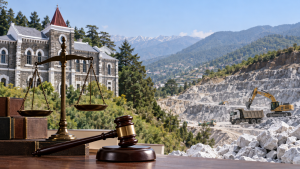
The Uttarakhand High Court allowed Almora Magnesite Company to resume operations, subject to compliance with all applicable rules and standards set by the State Pollution Control Board. The ruling was reported on 25 February 2026.
NOC and connected petitions
A division bench comprising Chief Justice Manoj Kumar Gupta and Justice Subhash Upadhyay directed the company to obtain a no-objection certificate from the Uttarakhand Pollution Control Board (UKPCB) within four months of the order. The court did not extend interim relief to other mining units involved in the petitions. The hearing also covered a suo motu public interest litigation concerning alleged cracks and damage linked to illegal chalk mining in villages of Bageshwar district, including Kanda tehsil, and petitions concerning 165 other mining units.
Important Facts for Exams
- PIL development: Indian public-interest litigation emerged around 1979–80 through Supreme Court judges V. R. Krishna Iyer and P. N. Bhagwati; courts have accepted public-importance matters submitted by letter.
- Environmental precedent: In 2017, a Uttarakhand High Court bench treated the Ganges, Yamuna and all water bodies as legal persons, appointing trustees to protect their rights against pollution.
- Pollution-board statutes: State Pollution Control Boards are constituted under the Water (Prevention and Control of Pollution) Act, 1974; the Air Act, 1981 assigns them additional air-quality functions.
- Separate environmental approvals: Mining projects generally face a separate environmental-clearance process under the 2006 EIA Notification, apart from pollution-board consents.
| Related | |
|---|---|