Uttarakhand Approves Embryo Transfer Pilot for Livestock
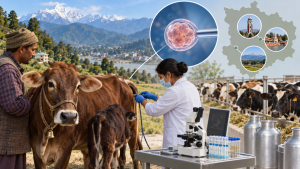
The Uttarakhand Cabinet approved a livestock-breeding plan using embryo transfer technology on 18 June 2026. The approval includes a pilot project proposed for Dehradun, Haridwar and Udham Singh Nagar districts.
Pilot objectives and proposed costs
The Animal Husbandry Department said the technique is intended to accelerate genetic improvement and increase livestock productivity. It estimates the programme could add about 7,000 metric tonnes of milk over five years. Farmers are proposed to contribute ₹1,500–2,000 per embryo transfer, with the government expected to cover the remaining estimated cost.
Important Facts for Exams
- MOET procedure: Conventional multiple-ovulation embryo transfer (MOET) uses hormones to induce several ovulations in a donor, followed by insemination and recovery of embryos for recipient animals.
- Embryo transfer distinction: Unlike artificial insemination, embryo transfer places a fertilised embryo into a recipient’s uterus; the recipient carries the pregnancy but does not supply the embryo’s nuclear genes.
Category: Uttarakhand
Originally written on
June 20, 2026
and last modified on
November 19, 2026.
| Related | |
|---|---|