Gujarat Waives Land Charges for Civic Projects in 152 Municipalities
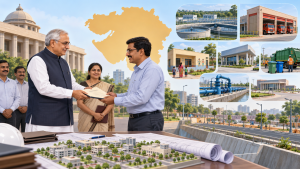
On 26 January 2026, the Gujarat government announced that it would allot government land free of cost to 152 municipalities for eligible civic projects.
Eligible projects and revised charges
The policy covers 11 types of essential civic facilities, including fire stations; sewage and water treatment plants; underground sewerage; drainage pumping stations; water-supply projects; solid and liquid waste-management plants; stormwater drainage; anganwadis; town halls; community halls; and convention centres. It replaces the previous requirement for municipalities to pay 25% to 50% of the market value or jantri rates for government land used in development works. The government said the waiver aims to ease municipalities’ financial burden and accelerate citizen-centric projects. The policy also simplifies land allocation for these projects.
Important Facts for Exams
- Urban tier: In India, municipalities are urban local bodies that interact directly with state government while remaining administratively part of their district.
- Constitutional role: India’s municipalities are a form of local self-government entrusted with duties and responsibilities under the 74th Amendment Act.
- Jantri valuation: In Gujarat, Jantri rates are government-notified property valuation benchmarks used in determining stamp duty, and may differ from prices actually agreed by buyers and sellers.
- Municipal taxation powers: Article 243X permits state legislatures to authorise municipalities to levy, collect and appropriate taxes, duties, tolls and fees, subject to constitutional limits.
| Related | |
|---|---|