Defying the barriers of age, gender and religion, Indian women became the torchbearers during the struggle for freedom in India. Discuss. (UPSC 2013)
Indian women were not passive supporters but active makers of the freedom struggle, crossing barriers of age, gender and religion to organise, mobilise and resist.
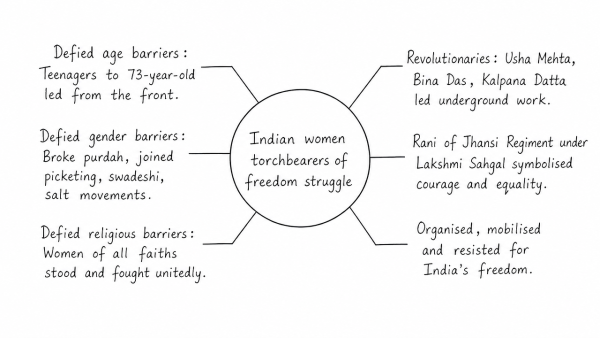
Age and gender barriers
Teenagers like Kanaklata Barua, Pritilata Waddedar and Rani Gaidinliu faced bullets, jail and death, while 73-year-old Matangini Hazra was shot leading a Tricolour procession. Women broke purdah, joined picketing, promoted swadeshi and made salt during mass movements. Revolutionaries such as Usha Mehta, Bina Das and Kalpana Datta carried out underground work, and the Rani of Jhansi Regiment under Lakshmi Sahgal symbolised women’s armed role in the INA.
Religious lines
Muslim women like Begum Hazrat Mahal and Bi Amma, Parsi leader Madam Bhikaiji Cama and Christian nationalist Annie Besant broadened the struggle’s social base.
Thus, Indian women became torchbearers of freedom by turning patriotism into mass action, unity and sacrifice.