Page-2 of Topic: Fundamental rights
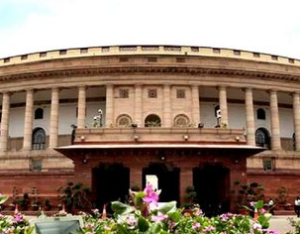
103rd Constitutional Amendment Act: Key Facts
President Ramnath Kovind has given the assent to the 124th constitutional Amendment Bill (which is now Constitution 103rd amendment Act) providing 10 per cent reservation for economically weaker...
Kerala High Court makes notice mandatory for strike and Hartals
The High Court of Kerala has set a seven-day notice period for political parties and individuals to call for hartal and general strike in the State. Why the...
Supreme Court declares right to privacy as Fundamental right under constitution
The nine-judge Constitution Bench of the Supreme Court headed by Chief Justice of India JS Khehar in a landmark unanimous decision has declared right to privacy a fundamental... IAF personnel cannot keep beard: SC
The Supreme Court ordered that Indian Airforce (IAF) personnel cannot keep beard. It held that Central Government’s decision to ban beards in the IAF does not infringe upon...
Fundamental Rights in India [UGC-NTA NET Political Science]
Fundamental Rights are a collection of rights guaranteed to all citizens of India. They are outlined in Articles 12 to 35 of the Constitution. These rights are designed...
Supreme Court of India – UGC-NTA NET Political Science Study Notes
The Supreme Court of India stands as the highest judicial authority in the country. Established on January 28, 1950, it serves as the final court of appeal under...
High Court in India – UGC-NTA NET Political Science
The High Court is a very important institution within the Indian judiciary system. It serves as the highest court of a state, ensuring justice and upholding the Constitution....
Judicial Review in India [UGC-NET Political Science Notes]
Judicial review is a critical aspect of the Indian legal system. It empowers the judiciary to assess the constitutionality of legislative and executive actions. This mechanism serves as...
Basic Structure Doctrine in India [UGC-NTA Net Political Science]
The Basic Structure doctrine is important aspect of India’s constitutional law. It asserts that certain fundamental features of the Constitution cannot be amended by Parliament. This principle was...