White Backed vulture
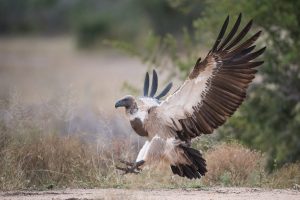
The white-backed vulture (Gyps africanus) is an Old World vulture belonging to the family Accipitridae, a group that also includes eagles, kites, buzzards and hawks. It has historically been regarded as the most widespread and abundant vulture species in Africa, playing a crucial ecological role as a scavenger in savannah and woodland ecosystems. Despite its former abundance, the species has experienced severe population declines over recent decades and is now classified as Critically Endangered, reflecting an extremely high risk of extinction in the wild.
The white-backed vulture is of considerable importance in ecological, conservation and public health contexts, as vultures rapidly remove animal carcasses, limiting the spread of disease. Its decline has therefore raised significant concern among conservationists, governments and international organisations.
Taxonomy and classification
The white-backed vulture belongs to the genus Gyps, which comprises large, social vultures distributed across Africa, Europe and Asia. Members of this genus are characterised by broad wings, strong soaring ability and a reliance on carrion as their sole food source. Within Accipitridae, vultures are closely related to birds of prey, although they differ markedly in behaviour and ecological function.
The species is sometimes referred to as the African white-backed vulture to distinguish it from similarly named species in other regions. It is considered a keystone scavenger within African ecosystems.
Physical description
The white-backed vulture is a medium-sized vulture with a robust body adapted for soaring flight. Adults typically have:
- A body length of approximately 85–98 cm
- A wingspan ranging from 200–230 cm
- A body mass of around 4–7 kg
The species has a bare head and neck covered only with sparse down, an adaptation that reduces feather fouling when feeding on carcasses. A distinctive white neck ruff separates the pale head from the darker body. The adult’s whitish or pale back contrasts sharply with the otherwise dark brown to black plumage, giving the species its common name.
Juveniles differ noticeably from adults, being largely dark overall and lacking the conspicuous pale back. As they mature, gradual changes in plumage lead to the adult colouration.
Distribution and habitat
The white-backed vulture has one of the widest distributions of any African vulture. Its range extends:
- From Senegal, Gambia and Mali in West Africa
- Across the Sahel region to Ethiopia and Somalia in the east
- Through East and southern Africa, including Mozambique, Zimbabwe, Botswana, Namibia and South Africa
The species primarily inhabits open and semi-open landscapes such as wooded savannahs, grasslands and open woodlands. It shows a strong association with areas that support large populations of wild or domestic ungulates, which provide a reliable source of carrion.
Although once common across most of its range, the white-backed vulture has suffered rapid and widespread declines, even in regions where it was formerly abundant.
Diet and feeding behaviour
White-backed vultures are obligate scavengers, meaning they feed exclusively on carrion. Their diet mainly consists of the carcasses of large grazing animals, including zebras, gazelles, wildebeest, warthogs, ostriches and livestock such as cattle.
Their beaks are medium-sized and not well adapted for tearing through thick skin. As a result, they specialise in consuming softer tissues, particularly the viscera. Feeding is typically conducted using a pulling technique rather than forceful tearing.
The species is highly social and usually feeds in large groups. White-backed vultures are often among the first vultures to arrive at a carcass and tend to dominate feeding sites compared with smaller vulture species such as hooded or Egyptian vultures. After feeding heavily, individuals may be temporarily unable to fly and are often observed resting with wings spread, facing the sun.
Contrary to popular belief, the circling flight of vultures is not primarily a signal to others about food. Instead, individuals rely on a combination of personal search strategies and social cues, balancing the benefits of shared information against the risk of increased competition.
Breeding and nesting ecology
White-backed vultures are tree-nesting birds, showing a strong preference for tall trees in savannah and riparian habitats. Acacia species are particularly favoured. Nests are large structures, approximately 1 metre in diameter, constructed from sturdy sticks and lined with leaves and grasses.
Breeding pairs are often loosely colonial, with multiple nests located within the same general area. Reproductive rates are low, with typically only one chick raised per breeding attempt, making populations especially vulnerable to adult mortality.
Long-term studies have documented alarming declines in nesting activity. For example, research in Botswana recorded a sharp reduction in breeding pairs over a ten-year period, highlighting the sensitivity of nesting success to environmental change and human disturbance.
Population status and trends
Historically, the white-backed vulture was considered the most common vulture species in Africa. In the early 1990s, its population was estimated at approximately 270,000 individuals. However, subsequent assessments revealed steep and ongoing declines.
Over the past four decades, the species is estimated to have undergone an overall population reduction of between 63% and 89%, with average annual declines of around 4%. These losses are consistent across much of its range and mirror declines observed in other African Gyps vultures.
Although adult white-backed vultures have relatively high survival rates, the species’ slow breeding rate means that the loss of breeding adults leads rapidly to population collapse. Juvenile and subadult birds have significantly lower survival rates, further exacerbating declines.
Threats and conservation challenges
The decline of the white-backed vulture is driven by multiple, often interacting threats:
- Poisoning: Both intentional and unintentional poisoning is the single greatest threat. Carcasses laced with poisons intended to kill predators such as lions or hyenas are frequently consumed by vultures. In addition, poachers have deliberately poisoned carcasses to prevent vultures from revealing illegal killing activities.
- Toxic veterinary drugs: The use of veterinary diclofenac in livestock has been shown to be lethal to vultures that feed on treated carcasses, mirroring the catastrophic impacts previously observed in Asian vulture populations.
- Habitat loss and disturbance: Agricultural expansion, ranching, fire and land management practices have reduced the availability of suitable nesting trees and disturbed breeding sites.
- Electrocution and collision: Power lines pose a significant mortality risk, particularly in open landscapes.
- Environmental contamination: Elevated levels of heavy metals such as lead, cadmium and copper have been detected in the organs of white-backed vultures, with lead concentrations exceeding average safe levels.