Tamil Nadu Releases Warehousing and Circular-Economy Policies
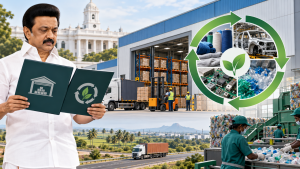
On January 13, 2026, Tamil Nadu Chief Minister M.K. Stalin released the Tamil Nadu Warehousing Policy 2026 and the Tamil Nadu Circular Economy Investment Policy 2026 at the Secretariat in Chennai.
Warehousing Policy incentives
The Tamil Nadu Warehousing Policy 2026 aims to develop modern warehousing infrastructure and strengthen logistics. It provides special financial incentives for warehouses in Delta and industrially underdeveloped districts. Eligible projects can receive a 25% fixed capital subsidy, capped at ₹2 crore, and a 50% concession on land cost. New warehouses can also receive a 25% subsidy, up to ₹2 crore, for green initiatives. A 50% subsidy for employee technical training is capped at ₹10,000 per employee.
Circular economy investment incentives
The Tamil Nadu Circular Economy Investment Policy 2026 targets textiles, automobiles, electronics and plastics to promote recycling, resource efficiency and investment in circular-economy industries. Recycling manufacturing units are eligible for a capital subsidy of 10% of investment. For net new jobs, the policy reimburses the employer’s EPF contribution up to ₹10,000 per employee per month, for a maximum of 50 employees. Waste-management technology companies can receive payroll subsidies of 30% in the first year, 20% in the second and 10% in the third.
Important Facts for Exams
- Circularity pathways: Circular resource use can be increased by narrowing, slowing or closing material loops, or by substituting renewable or less harmful inputs.
- Storage turnover: Warehouse storage may be divided into static storage for goods held longer and dynamic storage for faster-selling goods.
- Warehouse-receipt regulation: Under the Warehousing (Development and Regulation) Act, 2007, the WDRA registers warehouses and regulates negotiable warehouse receipts, which can support commodity-backed lending.
- Plastic-packaging EPR: In India, plastic-packaging extended producer responsibility is implemented through the Plastic Waste Management Rules, which require producers, importers and brand owners to meet prescribed obligations.
| Related | |
|---|---|