Tamil Nadu Assembly Adopts Resolution After Governor’s Walkout
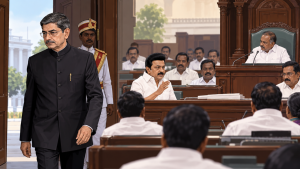
On January 20, 2026, Tamil Nadu Governor R.N. Ravi left the opening sitting of the Tamil Nadu Assembly without reading the state government’s prepared address. It was the third consecutive year that he had walked out without delivering the customary address.
Assembly Resolution
After the Governor’s exit, the Assembly unanimously adopted a resolution declaring the English version of the address prepared by the state government to have been read. It directed that only this text, along with the Speaker’s Tamil translation, be recorded in the official proceedings.
Government and Governor’s Office Responses
Chief Minister M.K. Stalin accused Governor Ravi of deliberately violating constitutional provisions. He said the DMK, with support from like-minded parties, would pursue a constitutional amendment in Parliament to remove the annual Governor’s address procedure. The Governor’s office said Ravi declined to read the address over 13 objections, including alleged misleading investment claims and governance lapses; it also said his microphone had been turned off.
Important Facts for Exams
- Article 176 timing: Article 176 requires the Governor to address the Legislature at the first session after each general election and at the first session of every year.
- Article 175 powers: Article 175 separately permits the Governor to address either House or both Houses and to send messages; it is distinct from Article 176’s scheduled address.
- Amendment ratification: Article 176 is not among the provisions for which Article 368 mandates state ratification; changing it requires special majorities in both Houses of Parliament.
- Governor’s aid and advice: Article 163 generally requires the Governor to act on ministerial aid and advice, except where the Constitution assigns or permits discretionary action.
| Related | |
|---|---|