Swachh Seva Aankalan Launched for Swachh Bharat Mission-Grameen
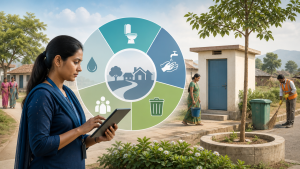
Swachh Seva Aankalan (SSA) is an annual digital self-assessment framework at the Gram Panchayat level for monitoring sanitation service delivery in rural areas under Swachh Bharat Mission-Grameen 2.0. Union Minister for Jal Shakti C. R. Patil launched the framework on 15 September 2026 during a virtual meeting with States and Union Territories, and Minister of State for Jal Shakti V. Somanna also attended the meeting.
Framework and institutional structure
SSA was developed by the Department of Drinking Water and Sanitation under the Ministry of Jal Shakti. The framework involves Gram Panchayats, Gram Sabhas, Village Water and Sanitation Committees, and district and State or Union Territory authorities in sanitation monitoring at the grassroots level.
Assessment parameters under SSA
Under SSA, ODF Plus (Model) Gram Panchayats, Village Water and Sanitation Committees, and local communities assess ODF sustainability, visual cleanliness, and Solid and Liquid Waste Management. The assessment also covers the functionality and operation and maintenance status of sanitation assets and community waste management assets.
Validation and local participation
The findings of the self-assessment are discussed and validated by the concerned Gram Sabha. Gram Sabha validation is a statutory feature of rural local governance under the Panchayati Raj system in India.
Important Facts for Exams
- Swachh Bharat Mission-Grameen was launched in 2014 as India’s rural sanitation programme.
- ODF stands for Open Defecation Free, a status used in sanitation monitoring.
- ODF Plus is a category used under Swachh Bharat Mission-Grameen 2.0 for sustained sanitation outcomes.
- Gram Sabha is the general assembly of voters in a village under the Panchayati Raj framework.
Rural sanitation governance
Village Water and Sanitation Committees are local institutions associated with drinking water and sanitation planning in villages. Operation and maintenance, commonly written as O&M, refers to the upkeep and functioning of public assets such as toilets, waste collection systems, and sanitation infrastructure.
| Related | |
|---|---|