Supreme Court Stays Order on Tamil Nadu Vice-Chancellor Appointments
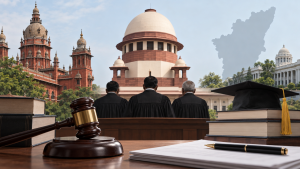
On February 4, 2026, the Supreme Court of India stayed a May 2025 interim order of the Madras High Court concerning vice-chancellor appointments in Tamil Nadu’s state-run universities.
Court directions and appointment powers
A bench comprising Chief Justice of India Surya Kant and Justices Joymalya Bagchi and Vipul M. Pancholi heard petitions filed by the Tamil Nadu government. The Supreme Court observed that the High Court’s vacation bench had issued its interim order in haste and without giving the state adequate time to present its arguments. It directed the High Court to complete its hearing within six weeks. The state government assured the Supreme Court that it would make no new vice-chancellor appointments until the High Court delivers its final decision. The dispute concerns state legislation seeking to transfer appointment powers from the Governor to the Chief Minister or state government; it followed the Governor’s withholding of assent to the bills.
Important Facts for Exams
- State-university leadership: In most Indian state universities, the Governor is the titular chancellor, while the vice-chancellor is the de facto head and highest-paid official.
- Governor’s bill options: Article 200 allows a state Governor to assent to a Bill, withhold assent, or reserve it for the President; non-money Bills may also be returned for reconsideration.
- Concurrent List assent: Under Article 254(2), a state law on a Concurrent List subject that conflicts with an earlier central law can prevail within that state after presidential assent, until Parliament legislates otherwise.
- Special-leave jurisdiction: Article 136 authorises the Supreme Court to grant special leave to appeal from court or tribunal decisions, except decisions of armed-forces tribunals.
| Related | |
|---|---|