Supreme Court Says 14 States Agree to Raise Judicial Officers’ Retirement Age
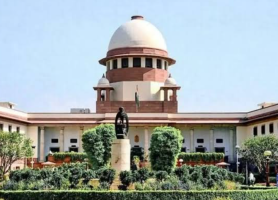
On 26 October 2026, the Supreme Court of India said that 14 states had agreed to raise the retirement age of District Judicial Officers from 60 to 62 years. The bench comprised Chief Justice Surya Kant and Justices Joymalya Bagchi and V. Mohana. On 4 September 2026, the Court had directed states to increase judicial officers’ retirement age.
Constitutional Framework for Subordinate Courts
Article 233 of the Constitution provides for the appointment, posting and promotion of district judges by the Governor in consultation with the High Court. Article 235 vests control over district courts and courts subordinate to them in the High Court. State service rules prescribe conditions of service, including retirement age, for judicial officers, subject to constitutional provisions and judicial directions. The Supreme Court’s 2002 decision in “All India Judges’ Association v. Union of India” set the retirement age for members of the subordinate judiciary at 60 years, subject to an assessment of their suitability for continued service.
Implementation and Eligibility
The 14 consenting states have been directed to amend their service rules to set the retirement age at 62 years, preferably within two months. Until the amendments take effect, judicial officers in those states who have reached 60 will not superannuate before 62, subject to assessment of their suitability and performance by the concerned High Court. Judicial officers in Chhattisgarh, Karnataka, Madhya Pradesh, Maharashtra, Sikkim, Tamil Nadu and West Bengal who retired on or after 31 March 2026 may opt to rejoin judicial service if they have not taken up other employment. The Supreme Court declined to urgently hear individual pleas from officers nearing retirement or recently retired, stating that the matter was between the Court and the states.
Judicial Service and Retirement Assessment
The Court’s direction makes the extension subject to a High Court assessment rather than an automatic continuation for every officer. The Chief Justice expressed hope that other states would also raise the retirement age. State rule amendments are required to implement the new age limit in the consenting states.
Important Facts for Exams
- Article 233 of the Constitution concerns the appointment of district judges.
- Article 235 vests control over subordinate courts in the High Court.
- The Supreme Court’s 2002 decision in “All India Judges’ Association v. Union of India” set the subordinate judiciary’s retirement age at 60 years.
- The seven states covered by the rejoining option are Chhattisgarh, Karnataka, Madhya Pradesh, Maharashtra, Sikkim, Tamil Nadu and West Bengal.
The retirement age extension is subject to suitability and performance assessments by the concerned High Courts. The seven named states’ rejoining option applies only to eligible officers who have not taken up other employment.
| Related | |
|---|---|