SMS Hospital Study Finds High Antibiotic Resistance
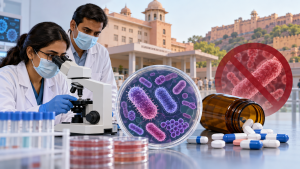
A two-year study led by Sawai Man Singh Medical College and Hospital in Jaipur examined 9,776 patients across five hospitals. Reported on 13 January 2026, it found antibiotic resistance in 60–98% of samples and antibiotics ineffective or of limited effectiveness in 57–90% of cases examined.
Resistance by antibiotic and bacteria
Ciprofloxacin resistance was found in 79% of 2,590 Klebsiella cases, 54% of 1,661 Pseudomonas cases, 74% of 326 Staphylococcus aureus cases and 77% of 1,766 Acinetobacter cases. Ampicillin resistance was recorded in 93% of 4,013 E. coli cases. Meropenem resistance was reported in 55% of Acinetobacter infections and 57% of Klebsiella cases.
Research team and findings
The research was led by Dr Rajni Sharma, head of the Microbiology Department, and Dr Deepak Maheshwari, principal and hospital controller of SMS Medical College. The findings raise concerns about indiscriminate and excessive antibiotic use. The report does not say that all antibiotics are ineffective; it points to increased risks for patients whose bacteria have developed resistance.
Important Facts for Exams
- Resistance belongs to microbes: Antimicrobial resistance is a property of the microbe, not of the person or other organism infected by it.
- Gene transfer routes: Bacteria can spread resistance genes between species through horizontal gene transfer, including conjugation, transduction and transformation.
- Resistance categories: Microbiological resistance involves inherited or mutated genes; clinical resistance describes bacteria becoming resistant after surviving treatment.
| Related | |
|---|---|