RNT Medical College Starts Home-Based CAPD Service
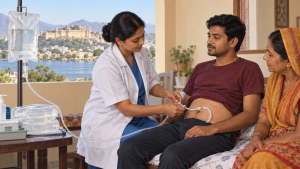
RNT Medical College’s nephrology department in Udaipur, Rajasthan, has started providing Continuous Ambulatory Peritoneal Dialysis (CAPD) for kidney patients in the division. The service was in operation by 27 May 2026.
Home-Based Dialysis Service
After training, patients can carry out CAPD at home independently or with help from family members. A special catheter delivers dialysis fluid into the abdomen, where it removes toxins and excess water. The first reported patient was a 21-year-old with chronic kidney disease who had experienced unstable blood pressure and access difficulties during haemodialysis. The service is free under the Mukhyamantri Ayushman Arogya Yojana and is expected to benefit people in remote rural and tribal areas, as well as patients with severe heart conditions or difficulties undergoing haemodialysis.
Important Facts for Exams
- CAPD exchange schedule: CAPD is performed during the day, with two litres kept in the abdomen and exchanges made four to six times daily.
- Peritoneal membrane: During a dwell, waste products diffuse from underlying blood vessels across the peritoneum while dialysis fluid remains in the abdomen.
- Peritoneal dialysis peritonitis: Peritonitis is a major complication of peritoneal dialysis; cloudy drained fluid and abdominal pain are warning signs requiring prompt clinical assessment.
- CAPD catheter design: A common CAPD access device is a soft Tenckhoff catheter, tunnelled through the abdominal wall and ending in the peritoneal cavity.
| Related | |
|---|---|