RBI Governor Urges States to Adopt Prudent Borrowing
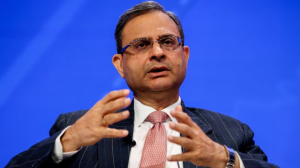
Reserve Bank of India (RBI) Governor Sanjay Malhotra advised State governments to adopt prudent borrowing strategies, maintain quality expenditure and manage cash efficiently at the 36th Conference of State Finance Secretaries in Mumbai on 27 October 2026. The conference theme was ‘Role of Quality of Expenditure, Effective Cash and Prudent Debt Management in Enhancing States’ Fiscal Sustainability’.
State fiscal management
Fiscal sustainability refers to a government’s ability to meet its spending and debt obligations over time. State borrowing finances expenditure but adds to public debt and future repayment obligations. Quality of expenditure concerns the effectiveness and intended outcomes of public spending. Cash management involves planning government receipts and payments to meet obligations on time and manage temporary cash mismatches.
Malhotra urged States to combine prudent borrowing with efficient cash management. He also released the Compendium on Cash and Debt Management for State Governments, which covers concepts, operational processes and practices related to State cash and debt management.
Banking and digital mechanisms
The State Level Bankers’ Committee (SLBC) is a State-level forum for coordination between banks, government departments and other stakeholders. Malhotra urged States to make effective use of the SLBC forum. He also encouraged States to onboard onto the Unified Lending Interface (ULI), a digital platform intended to facilitate access to credit through the sharing of relevant financial information.
Central Bank Digital Currency (CBDC) is digital money issued by a central bank. Programmable CBDC can have conditions attached to its use. Malhotra encouraged States to use Programmable Central Bank Digital Currency (P-CBDC) for Direct Benefit Transfers (DBT), through which government benefits are transferred directly to beneficiaries.
State borrowing and conference participants
The conference reviewed market borrowings by States, short-term financial accommodation from the RBI and adoption of a Benchmark Issuance Strategy. Such a strategy involves issuing debt securities at specified benchmark maturities to support a more regular borrowing pattern.
Finance secretaries from 27 States and three Union Territories attended the conference, along with senior officials from the Union Ministry of Finance, the Controller General of Accounts and the Comptroller and Auditor General of India.
Important Facts for Exams
- Article 293 of the Constitution of India concerns borrowing by States.
- Under Article 293(3), a State may require the Union government’s consent to raise a loan if it has outstanding loans or guarantees from the Union.
- The Reserve Bank of India began operations on 1 April 1935 under the Reserve Bank of India Act, 1934.
- The Reserve Bank of India was nationalised on 1 January 1949.
The RBI is India’s central bank, and its headquarters are in Mumbai. Article 293 governs State borrowing within the constitutional framework.
| Related | |
|---|---|