Rajasthan Tiger Population Reaches 149
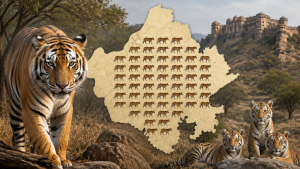
Rajasthan’s tiger population reached 149 across five tiger reserves as of 28 July 2026, up from 135 in 2025. The state’s tiger population includes adults and cubs, and the figures were released ahead of International Tiger Day, which is observed on 29 July.
Tiger Reserves in Rajasthan
Rajasthan has five tiger reserves: Ranthambore, Sariska, Mukundara Hills, Ramgarh Vishdhari, and Dholpur-Karauli. Ranthambore Tiger Reserve remains the largest tiger habitat in the state, with 72 tigers in 2026 compared with 66 in 2025. Sariska Tiger Reserve recorded 56 tigers in 2026, up from 50 in the previous year.
Breeding and Population Structure
Chief Wildlife Warden K.C. Arun Prasad stated on 28 July 2026 that 54 tigresses gave birth to 53 cubs in the year across the five tiger reserves. In 2025, 52 tigresses gave birth to 43 cubs. Of the 149 tigers, about 96 are adults and the remaining animals are cubs.
Carrying Capacity and Conservation Context
Ranthambore Tiger Reserve has an estimated carrying capacity of 40 to 50 tigers, while its current population stands at 72. Tiger carrying capacity refers to the maximum number of tigers that a habitat can support with available prey, water, and space. When tiger numbers exceed habitat capacity, dispersal into adjoining forests can occur.
Important Facts for Exams
- Project Tiger was launched in India in 1973 to conserve the Bengal tiger and its habitats.
- International Tiger Day is observed every year on 29 July.
- India conducts tiger estimation exercises under the National Tiger Conservation Authority framework.
- Ranthambore Tiger Reserve is one of the best-known tiger reserves in India and lies in Rajasthan.
Additional Population Figures
One estimate dated 29 July 2026 placed the number of tigers in the wild at 152 and the number in captivity at 15, taking the total to 167 in Rajasthan. Tiger population data in India is used for reserve-level management, habitat planning, and monitoring of breeding success.
| Related | |
|---|---|