PNGRB Authorises 1,800 km LPG Pipeline Network
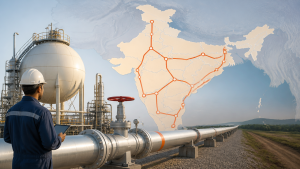
The Petroleum and Natural Gas Regulatory Board (PNGRB), India’s downstream oil and gas regulator, authorised 1,800 km of new liquefied petroleum gas (LPG) pipelines on 21 August 2026. The project has an estimated capital investment of ₹7,000 crore and has been assigned to GAIL (India) Limited as the authorised entity.
PNGRB and Pipeline Regulation
The PNGRB was established under the Petroleum and Natural Gas Regulatory Board Act, 2006, to regulate refining, processing, storage, transportation, distribution, marketing, and sale of petroleum, petroleum products, and natural gas. The Board also authorises common-carrier and contract-carrier pipelines under the regulatory framework for petroleum and natural gas infrastructure.
Project Layout and Route Coverage
The new LPG network will pass through six states: Telangana, Maharashtra, Uttar Pradesh, Uttarakhand, Karnataka, and Goa. The expansion consists of three pipelines, namely Cherlapally to Nagpur, Jhansi to Sitarganj, and Shikrapur to Goa and Hubli.
The three pipeline sections measure 556 km, 611 km, and 633 km respectively. Together, they form a dedicated LPG transportation network for bulk movement of liquefied petroleum gas across central, western, northern, and southern India.
Common-Carrier LPG Network
India’s common-carrier LPG pipeline network is projected to expand from about 7,700 km to around 9,500 km after completion of the project. This represents an increase of roughly 23.5% in the existing network length.
Common-carrier pipelines are open-access pipelines that can transport petroleum products for multiple users under regulated terms. Such pipelines are used for long-distance movement of fuels and reduce dependence on road tankers.
Important Facts for Exams
- LPG stands for liquefied petroleum gas, which is commonly used for domestic cooking and industrial applications.
- GAIL (India) Limited is a state-owned enterprise under the Ministry of Petroleum and Natural Gas.
- PNGRB regulates petroleum and natural gas infrastructure in India under the Petroleum and Natural Gas Regulatory Board Act, 2006.
- Common-carrier pipelines allow regulated third-party access for transportation of petroleum products.
Logistics and Environmental Features
Pipeline transport of LPG reduces the use of road tankers for bulk movement. It also lowers logistics costs, reduces road congestion, decreases accident risk, and cuts carbon emissions linked to road transport.
| Related | |
|---|---|