Pichavaram Mangroves Valued at ₹2,485 Crore
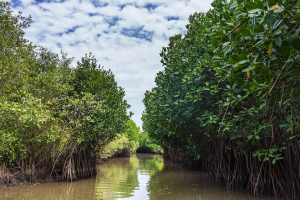
The Pichavaram mangrove forest in Cuddalore district, Tamil Nadu, has been assessed for ecosystem services at ₹2,485.38 crore, or about US$289 million. The valuation placed the total economic value at ₹1.83 crore per hectare and included carbon storage, fisheries support, tourism, coastal protection, biodiversity conservation, and local livelihoods.
Pichavaram Mangroves as a Ramsar Site
Pichavaram is one of India’s largest mangrove ecosystems and is listed as a Ramsar site. Mangroves are salt-tolerant coastal forests that grow in intertidal zones and are adapted to tidal inundation, saline water, and muddy substrates. In India, mangroves occur mainly along the coasts of Gujarat, Maharashtra, Goa, Karnataka, Kerala, Tamil Nadu, Andhra Pradesh, Odisha, and West Bengal, as well as in the Andaman and Nicobar Islands. Mangrove ecosystems are classified as coastal wetlands under the Ramsar Convention on Wetlands, 1971.
Blue Carbon and Soil Organic Carbon
The study estimated an average mangrove vegetation carbon stock of 79.449 tonnes per hectare, valued at about ₹28 lakh per hectare. The total vegetation carbon value was placed at ₹387 crore. Soil organic carbon formed the larger reservoir, with an average stock of 251.14 tonnes per hectare. The soil carbon value was estimated at ₹90.24 lakh per hectare, and the total soil carbon value was placed at ₹1,224.63 crore. The combined blue carbon asset value from vegetation and soil was estimated at ₹1,612 crore, or about ₹1.19 crore per hectare. Blue carbon refers to carbon captured and stored by coastal and marine ecosystems such as mangroves, seagrasses, and salt marshes.
Livelihoods, Livestock and Conservation Measures
A conservation-based livelihood project funded by NABARD has supported 100 Irula tribal households in the Pichavaram mangroves through scientific beekeeping. The project has an outlay of ₹25.37 lakh and plans to install 250 bee boxes. The honey produced under the brand name Pichavaram Mangrove Honey is linked to local livelihood generation. The Irula community is a Scheduled Tribe in Tamil Nadu and parts of neighbouring states.
Important Facts for Exams
- Pichavaram is among the largest mangrove forests in India and lies in Cuddalore district, Tamil Nadu.
- Mangroves are halophytic plants that grow in saline coastal and estuarine environments.
- Blue carbon ecosystems include mangroves, seagrasses, and salt marshes.
- The Ramsar Convention on Wetlands was adopted in 1971 and covers internationally important wetlands.
Environmental Stress and Pollution
Pichavaram mangroves face stress from microplastic pollution, shrimp farming, land conversion, and unregulated tourism. A study published in Chemosphere found seasonal microplastic contamination in fish and shellfish from the mangrove area, with monsoon months recording the highest levels.
| Related | |
|---|---|