Pakistan Imposes Governor’s Rule in Khyber Pakhtunkhwa
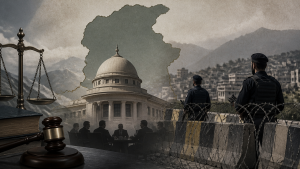
Pakistan’s President Asif Ali Zardari declared an emergency and imposed governor’s rule in Khyber Pakhtunkhwa on 11 October 2026. The provincial government led by the Pakistan Tehreek-e-Insaf (PTI) was suspended after a federal cabinet meeting chaired by Prime Minister Shehbaz Sharif. The federal government cited worsening law and order, terrorist attacks and a breakdown of constitutional machinery as grounds for the action.
Articles 232 and 234 of the Constitution
Article 232 of the Constitution of Pakistan concerns the proclamation of an emergency, including situations involving war, external aggression or internal disturbance beyond a provincial government’s capacity to control. Article 234 applies when the President is satisfied that a province cannot be governed in accordance with the Constitution. Under Article 234, the President may assume provincial government functions and provide for the exercise of provincial assembly powers by or under Parliament’s authority.
The proclamation cited Articles 232(1) and 234(1). The federal government alleged that the provincial administration had disengaged from counter-terrorism efforts. These stated grounds are the federal government’s position on the imposition.
Effect of governor’s rule
Under the proclamation, Chief Minister Sohail Afridi, provincial ministers, advisers and other officials were required to vacate their offices. The powers of the Khyber Pakhtunkhwa Assembly were assigned to Parliament. The federal government also appointed Dr Muhammad Fakhr Alam Irfan as the province’s chief secretary.
The announcement came during a protest march that began on 4 October 2026 and was led by Afridi. The march demanded the release of former Prime Minister Imran Khan and other detained PTI leaders. KP Information Minister Shafi Jan claimed that Afridi and provincial PTI president Junaid Akbar had been taken into custody. Internet disruptions were reported in parts of Peshawar, while PTI condemned the federal decision.
Provincial and security context
Khyber Pakhtunkhwa is one of Pakistan’s four provinces, and Peshawar is its provincial capital. The province shares a border with Afghanistan and has faced repeated militant violence. Article 234 is a constitutional provision concerning the failure of provincial constitutional machinery; it is distinct from the general emergency framework under Article 232.
Important Facts for Exams
- The Constitution of Pakistan was adopted in 1973.
- Khyber Pakhtunkhwa was formerly known as the North-West Frontier Province.
- The Eighteenth Amendment to Pakistan’s Constitution renamed the North-West Frontier Province as Khyber Pakhtunkhwa in 2010.
- The Governor of a Pakistani province is appointed by the President under Article 101 of the Constitution.
Article 232 provides for emergency proclamations, while Article 234 addresses a failure of constitutional governance in a province. The Khyber Pakhtunkhwa Assembly’s powers were assigned to Parliament under the 11 October 2026 proclamation.
| Related | |
|---|---|