Odisha Directs Districts to Form Task Forces Against Child Begging
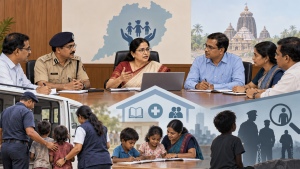
On 11 March 2026, the Odisha State Commission for Protection of Child Rights (OSCPCR) directed all districts to form task forces to address child begging. Commission Chairperson Babita Patra issued the directive to district collectors, police superintendents and municipal commissioners.
District task force and rescue measures
Each task force is to be chaired by the Collector and include the Superintendent of Police, municipal commissioner, District Child Protection Officer and labour officer. Teams are to conduct regular operations to rescue children involved in begging and present them to the Child Welfare Committee (CWC).
Care, monitoring and compliance
After rescue, children are to receive care, education, healthcare and counselling in child care centres. Authorities were also directed to monitor child trafficking and exploitation, with police units such as IUCAW and AHTU assigned this work. All authorities must submit monthly compliance reports to the OSCPCR.
Important Facts for Exams
- Statutory classification: Under India’s Juvenile Justice Act, a child found begging is expressly classified as a child in need of care and protection, triggering statutory safeguards.
- Committee composition: A Child Welfare Committee is constituted under the Juvenile Justice Act, with a chairperson and four members, including at least one woman and one member with expertise in child-related matters.
- Institutional categories: The Juvenile Justice Act recognises distinct child-care institution categories, including children’s homes for children needing care and protection and open shelters for community-based support.
| Related | |
|---|---|