Central Government Support Schemes for MSMEs
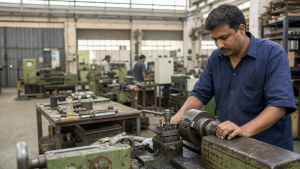
The Micro, Small and Medium Enterprises sector is central to India’s manufacturing base, employment generation, and export growth. Central government support schemes for MSMEs focus on easier credit, formalisation, digital market access, and assistance for traditional enterprises.
MSME Framework and Administration
The Ministry of MSME is the nodal ministry for policy, implementation, and sectoral support. It works through credit-linked incentives, market facilitation, and regulatory simplification to strengthen micro, small, and medium enterprises across the country.
- Administrative leadership: Union Minister Jitan Ram Manjhi, Minister of State Shobha Karandlaje, and Secretary Bharat Harbanslal Khera.
- Policy focus: Support for manufacturing, services, employment generation, and exports through central schemes and institutional credit.
MSMED (Amendment) Bill, 2026
The Micro, Small and Medium Enterprises Development (Amendment) Bill, 2026 updated the MSMED Act, 2006 to align the legal framework with current economic requirements. It introduces greater flexibility in classification and strengthens protection for micro and small enterprises in payments and disputes.
- Flexible classification: The Bill replaces rigid statutory thresholds with parameters notified by the Central Government based on investment and turnover.
- Udyam Registration: The Udyam Registration Portal is retained as a permanent, free, digital, and voluntary registration platform for MSMEs.
- Payment protection: All Central Public Sector Enterprises are mandated to clear MSME procurement invoices through the Trade Receivables Discounting System (TReDS) to reduce payment delays.
- Appeal safeguard: Courts may require a pre-deposit of at least 50% of the awarded dispute amount before entertaining appeals in cases involving Micro and Small Enterprise suppliers.
- Decriminalisation: Minor procedural and compliance defaults are shifted from criminal provisions to civil graded monetary penalties.
Budgetary Support and Credit Enhancement
Recent financial measures have aimed to widen access to capital, reduce collateral stress, and support enterprise expansion. These tools are especially important for micro and small units that often face working-capital shortages.
- SME Growth Fund: A new ₹10,000 crore fund has been created to provide equity support to high-potential MSMEs.
- SRI Fund top-up: The Self-Reliant India (SRI) Fund has been supplemented with ₹4,000 crore for risk capital support to micro-units.
- CGTMSE support: The collateral-free credit guarantee limit under the Credit Guarantee Fund Trust for Micro and Small Enterprises has been raised up to ₹10 crore per enterprise.
- MSME Credit Card: A proposed ₹5 lakh credit limit is intended to provide working capital support to 10 lakh micro-enterprises.
Trade Facilitation and Digital Integration
Ease of doing business for MSMEs increasingly depends on digital registration, market access, and faster financing. The government has taken steps to integrate platforms and expand export opportunities for smaller units.
- Courier exports: The ₹10 lakh value cap per consignment on courier exports has been removed to help small businesses and artisans access overseas markets.
- Corporate Mitras: This compliance assistance framework is meant to help MSMEs meet regulatory requirements at affordable cost, especially in Tier-II and Tier-III towns.
- GeM and TReDS: The Government e-Marketplace is scheduled to integrate with the TReDS platform to improve liquidity through faster and cheaper invoice financing.
- Udyam scale: Formal registration data shows over 7.9 crore cumulative registrations across the Udyam Registration Portal and Udyam Assist Platform as of March 2026.
- Employment reporting: The same data reports 34.50 crore cumulative jobs up to February 28, 2026.
PM Vishwakarma Scheme
The PM Vishwakarma Scheme supports traditional artisans and craftspeople in the unorganised sector with end-to-end assistance. It covers skill support, toolkit assistance, and low-cost credit to help beneficiaries improve productivity and formalise their work.
- Outlay: ₹13,000 crore for a five-year period from 2023 to 2028.
- Coverage: 18 designated unorganised trades.
- Training support: ₹500 daily stipend during training.
- Toolkit support: ₹15,000 toolkit e-voucher for registered artisans.
- Credit support: Collateral-free enterprise development loans of up to ₹3 lakh at a concessional interest rate of 5%.
Key Prelims Takeaways
- Ministry role: The Ministry of MSME is the nodal ministry for policy, credit support, formalisation, and market facilitation.
- Legal update: The MSMED (Amendment) Bill, 2026 introduces flexible classification criteria and decriminalises minor compliance defaults.
- Payment reform: CPSEs are required to use TReDS for MSME procurement invoices to reduce delayed payments.
- Dispute protection: Appeals involving Micro and Small Enterprise suppliers may require a 50% pre-deposit of the awarded amount.
- Credit support: Major support measures include the ₹10,000 crore SME Growth Fund, ₹4,000 crore SRI Fund top-up, and enhanced CGTMSE coverage up to ₹10 crore.
- Market access: Removal of the courier export cap and integration of GeM with TReDS are aimed at improving liquidity and trade access.
- PM Vishwakarma: The scheme provides ₹13,000 crore support, ₹500 daily stipend, ₹15,000 toolkit voucher, and loans up to ₹3 lakh at 5% interest.
| Related | |
|---|---|