WTO is an important international institution where decisions taken affect countries in a profound manner. What is the mandate of WTO and how binding are their decisions? Critically analyse India’s stand on the latest round of talks on Food security. (UPSC 2014)
The WTO is the key global trade body shaping market access, subsidies, dispute settlement and policy space. Its agreements are legally binding on members; dispute rulings are binding too, but enforcement depends on compliance or authorised retaliation, and the Appellate Body crisis has weakened this system.
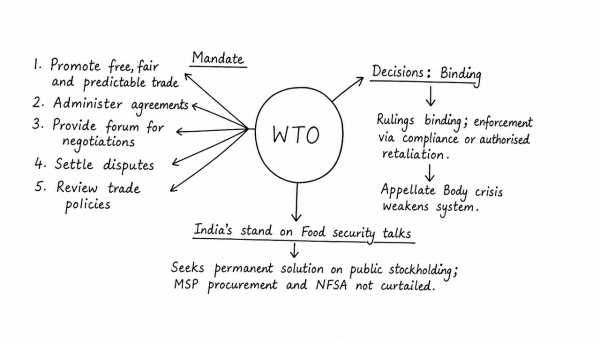
Mandate: promote free, fair and predictable trade; administer agreements; provide a forum for negotiations; settle disputes; and review trade policies.
India and food security: India has pressed for a permanent solution on public stockholding, arguing that MSP-based procurement and food distribution under the NFSA should not count as trade-distorting subsidies.
This stance protects poor consumers, small farmers and policy space, but the current rules use outdated price benchmarks, can distort trade, and India’s hard line has slowed broader WTO reform.