With suitable examples, discuss how traditional climate-adaptive practices of indigenous tribes can be scaled up to design robust, community-led nature-based solutions for climate resilience.
Traditional climate-adaptive practices of indigenous tribes are living examples of Traditional Ecological Knowledge and can form the basis of strong nature-based solutions. They work with local ecosystems, reduce risk and support livelihoods, biodiversity and social equity.
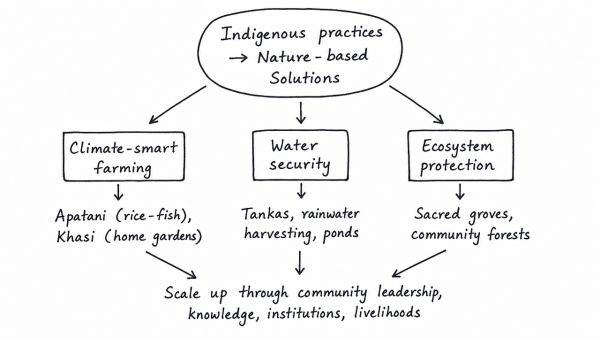
- Climate-smart farming: The Apatani in Arunachal Pradesh use wet-rice terrace farming with paddy-cum-fish culture and efficient irrigation. Khasi communities in Meghalaya practise diverse home gardens and low-chemical farming. Such models can be scaled through millet missions, seed banks, farmer collectives and extension support.
- Water security: Rajasthan’s traditional tankas, rooftop rainwater harvesting and ponds show how local design stores water and recharges aquifers. With MGNREGA support and technical upgrades, these can be replicated in drought-prone villages and peri-urban areas.
- Forest and fire management: Sacred groves and Orans protect biodiversity and water sources, while the Karuk Tribe’s cultural burning reduces wildfire intensity. Similar community-managed forests and controlled burning can be adapted to Indian dry forests and hill regions.
- Flood and ecosystem resilience: The Mising community’s community-led flood response and the relocation of beavers by Tulalip Tribes show how local ecology can reduce disaster impacts. Riverine landscapes can adopt wetlands restoration, embankment care and biodiversity buffers.
Scaling requires: secure land and resource rights, especially under the Forest Rights Act and PESA; Free, Prior and Informed Consent; direct access to climate finance; and blending indigenous practice with modern science without eroding local control.
Therefore, robust climate resilience should not treat indigenous communities as passive beneficiaries. Their knowledge must guide planning, implementation and monitoring so that nature-based solutions are locally rooted, socially just and ecologically durable.