With growing energy needs should India keep on expanding its nuclear energy programme? Discuss the facts and fears associated with nuclear energy. (UPSC 2018)
India’s rising energy demand, industrial growth and climate commitments make nuclear power an important option. It can provide reliable round-the-clock electricity and reduce dependence on fossil fuels, but expansion must be careful, transparent and cost-effective.
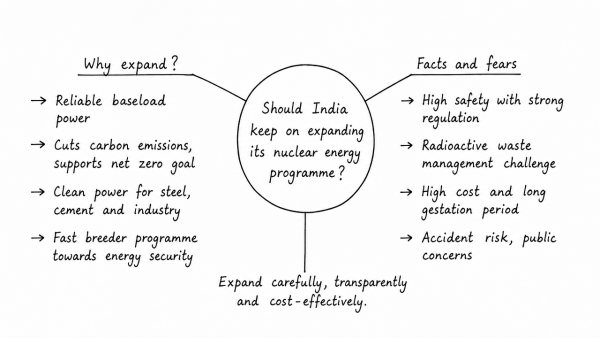
- Why expand nuclear energy?
- It offers stable baseload power with a high plant load factor, unlike solar and wind which are variable.
- It helps cut carbon emissions and supports India’s net zero goal.
- It can supply clean power for steel, cement and other hard-to-abate sectors.
- India’s fast breeder reactor programme is a key step towards using thorium, of which India has large reserves.
- Facts in favour
- India already has an operating nuclear fleet and more reactors are under construction.
- Small modular reactors and captive nuclear plants may improve safety, flexibility and industrial use.
- Nuclear energy has very low operational carbon emissions and needs less land than many renewables for similar firm power.
- Fears and concerns
- High capital cost and long construction time make projects financially risky.
- Radioactive waste needs secure long-term storage, which remains a major challenge.
- Accident risk, though low, has severe consequences and creates public fear.
- Water use, site selection, displacement and ecological impacts often trigger local opposition.
- Fuel supply dependence and liability issues can discourage private investment.
Therefore, India should keep expanding nuclear energy, but as part of a balanced energy mix. Priority should be given to safer reactor designs, strong regulation, waste management, indigenous technology and public trust. Nuclear power is not a complete solution, but it is a vital part of India’s clean and secure energy future.
Originally written on
September 1, 2026
and last modified on
September 1, 2026.