With a consideration towards the strategy of inclusive growth, the new Companies Bill, 2013 has indirectly made CSR a mandatory obligation. Discuss the challenges expected in its implementation in right earnest. Also discuss other provisions in the Bill and their implications. (UPSC 2013)
The Companies Act, 2013 made CSR a statutory expectation for large firms through Section 135, linking corporate profit with inclusive growth. It is a major shift from voluntary philanthropy to accountable social investment.
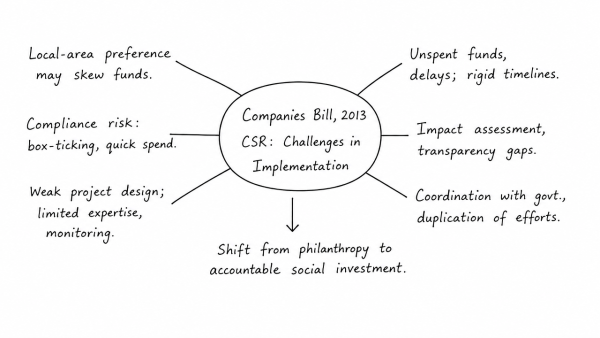
- Implementation challenges: local-area preference may skew funds to richer States, leaving backward and tribal regions underfunded.
- Compliance risk: firms may treat CSR as a box-ticking duty, favouring quick spending over long-term social outcomes.
- Weak project design: many companies lack social expertise, while credible NGOs and monitoring systems remain limited.
- Unspent funds and delays: rigid timelines can force hurried spending and reduce quality.
- Impact gap: poor outcome assessment can lead to branding exercises and greenwashing.
- Other provisions: one person company promotes entrepreneurship and formalisation.
- Woman director rule: improves board diversity and gender inclusion.
- NCLT/NCLAT and SFIO: speed up dispute resolution and strengthen fraud control.
- Class action suits and audit reforms: protect minority investors and improve governance.
Overall, the Bill deepens corporate accountability, but its success depends on flexibility, strong oversight, and measurable social impact.
Originally written on
August 28, 2026
and last modified on
September 7, 2026.