Why have urban local bodies struggled to effectively implement the Street Vendors Act of 2014? Point out the main governance challenges.
Urban local bodies have struggled because the Street Vendors Act, 2014 changed the legal status of vendors, but not the older municipal mindset. Many cities still treat vending as encroachment, so implementation remains weak, delayed and often hostile.
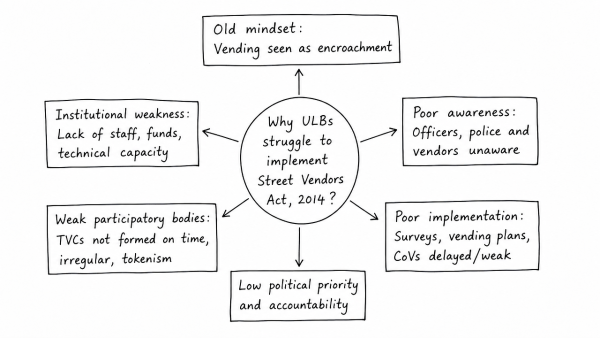
- Institutional weakness: ULBs lack staff, funds and technical capacity for surveys, vending plans and issuing Certificates of Vending.
- Poor awareness: Municipal officers, police and vendors are often unaware of rights and duties under the Act.
- Weak participatory bodies: Town Vending Committees are not always formed on time, or function irregularly with token vendor voice.
- Faulty planning: Vending zones are often poorly demarcated, arbitrary, and not linked to local demand.
- Governance gaps: Poor coordination, low political will, weak grievance redressal and poor data systems hinder enforcement.
The Act needs a rights-based urban governance approach. Unless ULBs are empowered, sensitised and held accountable, street vending will remain vulnerable despite legal protection.
Originally written on
September 14, 2026
and last modified on
September 14, 2026.