Why does India continue to face low female labor force participation despite rising education levels? Critically discuss the structural reforms needed to achieve gender parity.
India’s female labour force participation remains low not due to lack of education, but because work, care, safety and job quality remain hostile to women.
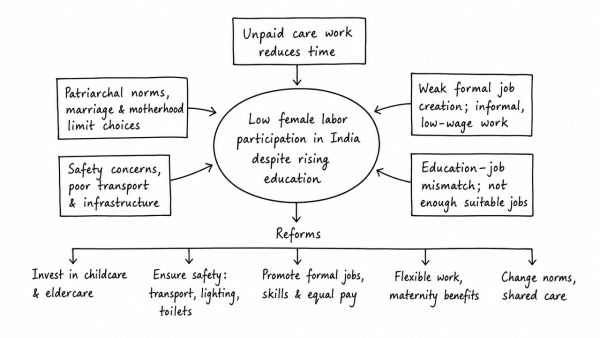
- Why low?
- Unpaid care work, especially childcare and eldercare, reduces time for paid work.
- Patriarchal norms, marriage and motherhood expectations limit mobility and employment choices.
- Unsafe transport, poor lighting, inadequate toilets and harassment deter commuting and night shifts.
- Formal job creation is weak; many women are pushed into informal, unpaid or low-wage work without social security.
- Education has not translated into suitable jobs; skill mismatch and workplace discrimination persist.
- Needed reforms
- Expand public care infrastructure: crèches, affordable childcare, eldercare and paid care services.
- Create safer, flexible and formal jobs with social protection, maternity support and equal pay.
- Improve public transport, street lighting, hostels and strict enforcement of anti-harassment laws.
- Shift policy from only improving supply of skills to generating labour-intensive, women-friendly jobs in manufacturing, services and care.
- Strengthen skilling, credit access and entrepreneurship support in non-traditional sectors.
Higher education will raise female work participation only when India reforms care burdens, labour markets, urban safety and workplace norms to make decent work accessible and sustainable for women.
Originally written on
September 12, 2026
and last modified on
September 12, 2026.