Why did the ‘Moderates’ fail to carry conviction with the nation about their proclaimed ideology and political goals by the end of the nineteenth century? (UPSC 2017)
The Moderates gave India an early political language, but by the end of the nineteenth century they failed to win broad public trust. Their aims, methods, and social base were too limited for a colonised society facing growing hardship.
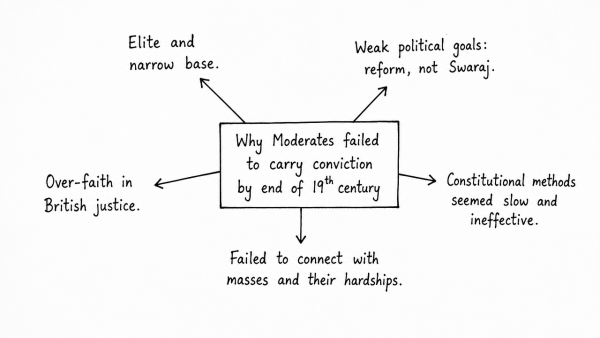
- Elite and narrow base: They were mainly English-educated urban professionals, with little link to peasants, workers or the rural poor.
- Weak political goals: They asked for gradual reform and self-government within the Empire, not Swaraj, which seemed timid.
- Over-faith in British justice: Their belief in British fairness looked unrealistic amid repression, famines, plague and economic drain.
- Methods lacked force: Petitions, prayers and protests appeared like political mendicancy and achieved little beyond the Indian Councils Act, 1892.
- Language and organisation gap: English debate and weak local presence kept the masses outside the movement.
Thus, the Moderates built political consciousness, but their caution, elitism and limited results prevented them from carrying conviction with the nation.
Originally written on
August 31, 2026
and last modified on
August 31, 2026.