What were the reasons for the introduction of Fiscal Responsibility and Budget Management (FRBM) Act, 2003? Discuss critically its salient features and their effectiveness. (UPSC 2013)
The FRBM Act, 2003 was introduced to restore fiscal discipline after years of rising deficits, debt and inflationary financing. It sought to improve macroeconomic stability, credibility and long-term growth by curbing government borrowing for current spending.
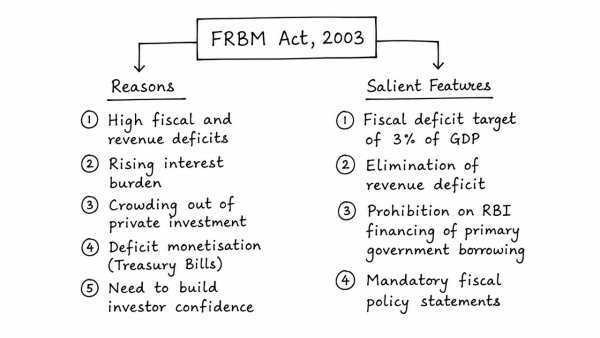
- Reasons: high fiscal and revenue deficits; rising interest burden; crowding out of private investment; deficit monetisation through ad hoc Treasury Bills; and the need to build investor confidence.
- Key features: fiscal deficit target of 3% of GDP; elimination of revenue deficit; prohibition on RBI financing of primary government borrowing; and mandatory fiscal policy statements to Parliament.
- Escape clause: allowed deviation in war, calamity, national security crisis or severe economic shock.
- Effectiveness: it improved transparency and initially reduced deficits. Yet, rigid targets were often relaxed during crises, and off-budget borrowings sometimes weakened true compliance.
Thus, FRBM was a major step towards responsible budgeting, but its success depends on realistic targets, credible enforcement and greater attention to debt sustainability and quality of expenditure.
Originally written on
August 28, 2026
and last modified on
September 7, 2026.