What problems were germane to the decolonization process in the Malay Peninsula? (UPSC 2017)
The decolonisation of the Malay Peninsula was not a smooth transfer of power. It was complicated by constitutional conflict, ethnic tensions and a communist insurgency, all of which made nation-building difficult.
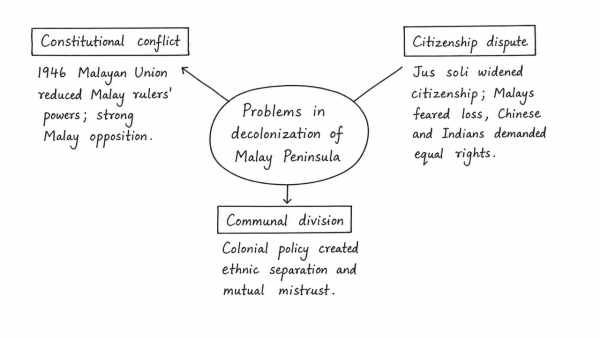
- Constitutional issue: The 1946 Malayan Union reduced the powers of the Malay rulers, provoking strong Malay opposition. It was replaced by the Federation of Malaya in 1948.
- Citizenship dispute: The British tried to widen citizenship through jus soli, but Malays feared loss of political dominance, while Chinese and Indians demanded equal rights.
- Communal division: Colonial policy had created a plural society, with Malays, Chinese and Indians living and working separately. This encouraged race-based politics.
- Security crisis: The Malayan Communist Party launched an armed insurgency during the Malayan Emergency, forcing the British to focus on law and order.
Thus, decolonisation in Malaya involved balancing Malay sovereignty, minority rights and internal security, while also laying the basis for a stable federal state.
Originally written on
August 31, 2026
and last modified on
August 31, 2026.