What policy instruments were deployed to contain the Great Economic Depression? (UPSC 2013)
The Great Depression forced a sharp break from laissez-faire economics. Governments used monetary, fiscal, banking and trade measures to arrest deflation, revive demand and restore confidence.
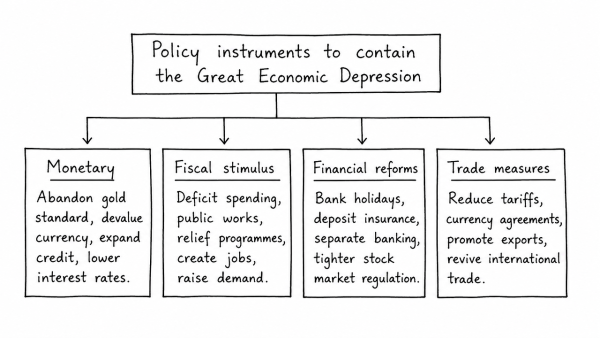
- Monetary measures: Countries abandoned the gold standard, devalued currencies and expanded credit. Lower interest rates and easier money helped reverse deflation and improve exports.
- Fiscal stimulus: Balanced-budget orthodoxy gave way to deficit spending and public works. Roads, dams, power projects and relief programmes created jobs and raised purchasing power.
- Financial reforms: Bank holidays, deposit insurance, separation of commercial and investment banking, and tighter stock-market regulation stabilised banking systems and reduced panic.
- Agricultural and industrial controls: Output controls, price support and fair-wage codes were used to lift prices and incomes.
- Trade policy: Although some states raised tariffs, later bilateral tariff reductions and imperial preference sought to revive trade.
Thus, containment of the Depression depended mainly on state intervention, demand management and financial regulation, marking the rise of Keynesian policy.
Originally written on
August 28, 2026
and last modified on
September 6, 2026.