What is the meaning of the term ‘tax expenditure’? Taking housing sector as an example, discuss how it influences the budgetary policies of the government. (UPSC 2013)
Tax expenditure means the revenue the government forgoes because of tax concessions such as exemptions, deductions, rebates, lower rates or deferrals. It is an indirect subsidy delivered through the tax system instead of a direct budget grant.
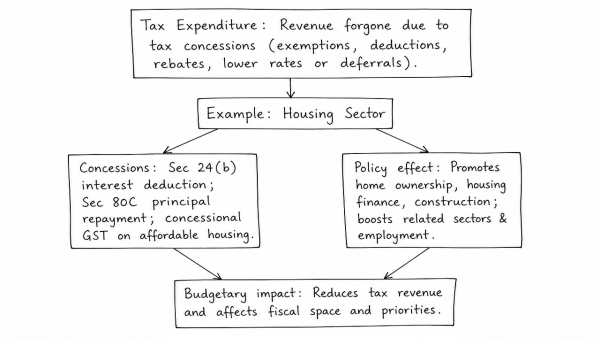
- Housing as an example: Interest on home loans is deductible under Section 24(b) and principal repayment under Section 80C. Affordable housing also enjoys concessional GST.
- Policy effect: These concessions encourage home ownership, housing finance and construction activity, and support related sectors like cement, steel and employment.
- Budgetary impact: They reduce tax revenue and shrink fiscal space, so the government must balance such incentives with deficit targets and spending priorities.
- Equity issue: Benefits often accrue more to middle and higher income taxpayers, prompting a mix of tax breaks and direct schemes such as subsidised housing for poorer groups.
Thus, tax expenditure is a hidden fiscal cost that shapes budget choices, using housing policy to stimulate growth while still raising questions of efficiency and fairness.
Originally written on
August 28, 2026
and last modified on
September 7, 2026.