What is the basis of regionalism? Is it that unequal distribution of benefits of development on regional basis eventually promotes regionalism? Substantiate your answer. (UPSC 2016)
Regionalism rests on geography, language, culture, history and politics. It reflects a shared regional identity and the desire to protect local resources, jobs and autonomy.
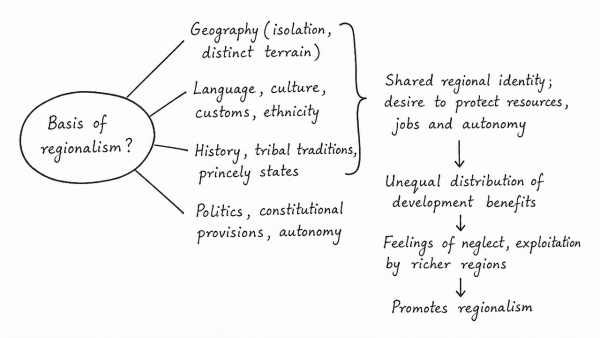
Basis: Physical isolation and distinct terrain can create separate consciousness; language, customs and ethnicity unify people; historical legacies, tribal traditions, old princely states and special constitutional provisions also strengthen regional claims.
Unequal development and regionalism: Yes, uneven distribution of development benefits often promotes regionalism. When a region faces low industrialisation, poor infrastructure, unemployment and neglect in services, people may feel exploited by richer regions or the Centre. This leads to demands for statehood, special packages and greater control over resources; Telangana is a classic example of such grievances over irrigation, jobs and power.
However, unequal development is only one major cause; regionalism intensifies when economic disparity combines with identity, political mobilisation and perceived injustice, so balanced development and fair federalism are key to containing it.