What is a digital signature? What does its authentication mean? Give various salient built-in features of a digital signature. (UPSC 2013)
A digital signature is a cryptographic method used to sign an electronic record and confirm the signer’s identity. It uses a private key to create a unique code, which can be checked with a public key, much like a secure electronic seal.
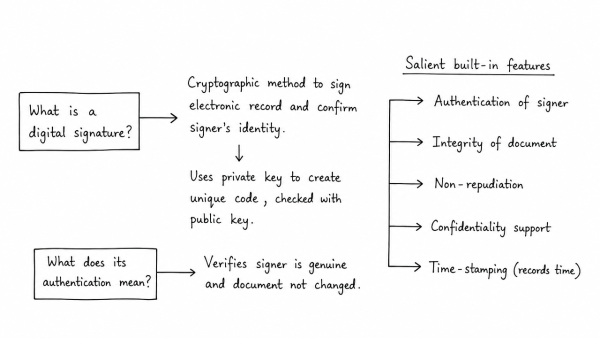
- Authentication: it verifies that the signer is genuine and the document has not been changed.
- Integrity: even one alteration in the file makes verification fail.
- Non-repudiation: the signer cannot easily deny the signature later.
- Confidentiality support: it may work with encryption for secure transmission.
- Time-stamping: it records when the signature was made.
Thus, digital signatures provide trust, legal validity and security in electronic communication.
Originally written on
August 29, 2026
and last modified on
September 7, 2026.