What do you understand by Fixed Dose Drug Combinations (FDCs)? Discuss their merits and demerits. (UPSC 2013)
Fixed Dose Drug Combinations (FDCs) are formulations containing two or more active drugs in a single dosage form in a fixed ratio. They may be rational, when the drugs have a clear scientific and therapeutic basis, or irrational, when the mix lacks proven benefit.
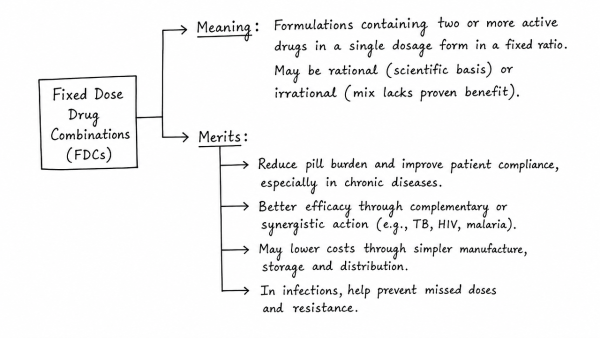
- Merits: reduce pill burden and improve patient compliance, especially in chronic diseases.
- Merits: can produce better efficacy through complementary or synergistic action, as in TB, HIV and malaria treatment.
- Merits: may lower costs through simpler manufacture, storage and distribution.
- Merits: in infections, they help prevent missed doses and reduce the risk of resistance.
- Demerits: dose cannot be adjusted for each drug, limiting personalised treatment.
- Demerits: side effects are harder to trace to a particular component.
- Demerits: patients may receive unnecessary or even harmful ingredients.
- Demerits: irrational FDCs can promote antimicrobial resistance and drug interactions.
Thus, FDCs are useful when clinically justified and properly regulated, but irrational combinations should be avoided in the interest of patient safety and public health.
Originally written on
August 29, 2026
and last modified on
September 7, 2026.