What are the reasons for poor acceptance of cost-effective small processing units? How will food processing units be helpful to uplift the socio-economic status of poor farmers? (UPSC 2017)
Cost-effective small processing units can reduce waste and add value near farms, yet their acceptance among poor farmers remains limited. The main issue is not only cost, but also the weak ecosystem needed to run them.
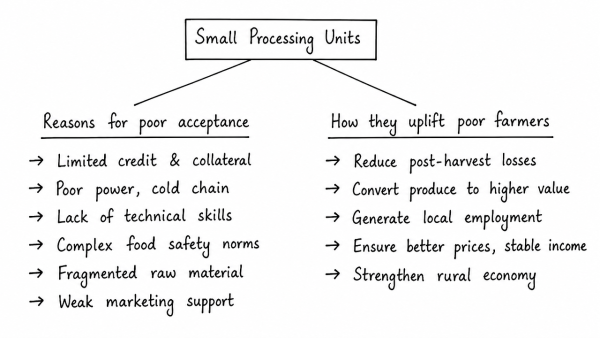
- Reasons for poor acceptance: limited credit and collateral, poor rural power and cold chain, lack of technical skills and repair support, complex food safety compliance, fragmented raw material supply, and weak marketing against larger brands.
- How they help poor farmers: they cut post-harvest losses, especially in fruits and vegetables; convert raw produce into higher-value goods; absorb seasonal surplus and prevent distress sale; and create local jobs in grading, packaging, transport and maintenance.
- Social impact: they encourage farmer collectives, SHGs and women-led enterprises, improve cash flow, and reduce migration by creating non-farm income in villages.
Thus, with credit support, infrastructure, training and market linkage, food processing units can become a strong tool for raising farm incomes and improving rural livelihoods.
Originally written on
August 31, 2026
and last modified on
August 31, 2026.