What are the major changes brought in the Arbitration and Conciliation Act, 1996 through the recent Ordinance promulgated by the President? How far will it improve India’s dispute resolution mechanism? Discuss. (UPSC 2015)
The Presidential Ordinance brought important reforms to make arbitration faster, more credible and less court-driven. It aimed to reduce delay, strengthen party autonomy and improve enforcement of awards.
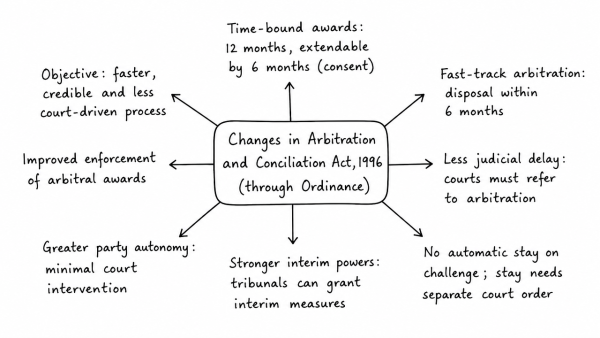
- Time-bound procedure: Awards must be made within 12 months, extendable by 6 months with consent. A fast-track route was also introduced for disposal within 6 months.
- Less judicial delay: Courts must refer parties to arbitration where a valid agreement exists. Filing a challenge no longer gives an automatic stay on enforcement; stay now needs a separate order.
- Stronger interim powers: Tribunals can grant interim measures with the same force as court orders. Section 9 relief for foreign-seated arbitration was widened, subject to conditions.
- Neutrality and costs: Conflict-of-interest rules for arbitrators were tightened. A cost regime was added to curb frivolous claims and delay tactics.
These changes can improve India’s dispute resolution system by making it quicker, more predictable and investment-friendly. However, success depends on trained arbitrators, fewer adjournments, and disciplined court support; otherwise, delays may continue despite better law.
Originally written on
August 30, 2026
and last modified on
August 30, 2026.