What are the key areas of reform if the WTO has to survive in the present context of ‘Trade War’, especially keeping in mind the interest of India? (UPSC 2018)
The WTO can survive today’s trade wars only if it regains credibility, fairness and a development focus, while preserving India’s policy space and a rule-based trading order.
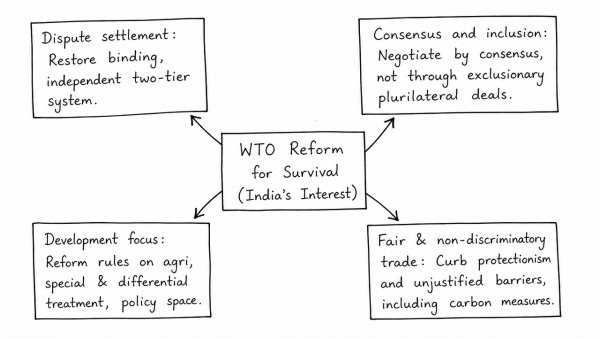
- Dispute settlement: Restore a binding, independent two-tier system. The Appellate Body paralysis has encouraged unilateral tariffs and retaliation; India needs effective remedies against protectionist and disguised barriers, including carbon border measures.
- Consensus and inclusion: Core WTO rules should continue to be negotiated by consensus, not through exclusionary plurilateral deals. This protects smaller and developing members, including India, from rules being set by a few major powers.
- Agriculture and S&D: Deliver a permanent solution on public stockholding for food security and a special safeguard mechanism to handle import surges. Special and differential treatment must remain meaningful in subsidies, market access and industrial policy, reflecting uneven development.
- Digital and industrial policy: Frame balanced rules on e-commerce, data flows and taxation, while allowing India to tax digital imports and nurture domestic digital industry. WTO rules should not unduly restrict legitimate subsidies, standards or supply-chain resilience measures.
Thus, WTO reform must make the system enforceable, inclusive and development-oriented, so that India can secure trade, food security and industrial growth.
Originally written on
September 1, 2026
and last modified on
September 1, 2026.