What are the environmental implications of the reclamation of the water bodies into urban land use? Explain with examples. (UPSC 2021)
Reclamation of water bodies for urban land use weakens the natural balance of cities. It reduces flood storage, cuts groundwater recharge and destroys habitats, while also raising heat and pollution stress.
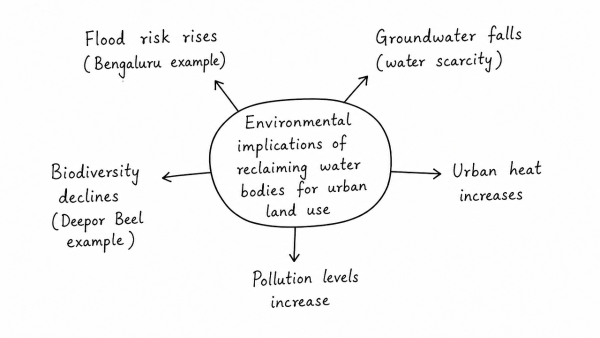
- Flood risk rises: lakes and wetlands act as sponges. In Bengaluru, loss of lake interlinks and rajakaluves has worsened flooding and runoff.
- Groundwater falls: paved reclaimed land blocks recharge, deepening water scarcity in cities.
- Biodiversity declines: habitat loss affects fish, aquatic plants and birds. Deepor Beel in Guwahati has suffered from dumping and encroachment.
- Urban heat increases: fewer water surfaces mean less evaporative cooling and stronger urban heat island effects.
- Water quality worsens: wetlands that filter sewage and nutrients shrink, causing eutrophication and toxic foam, as seen in Bellandur Lake.
Thus, reclamation may offer short-term land for construction, but it creates long-term ecological and economic losses. Urban planning must protect and restore water bodies as critical natural infrastructure.
Originally written on
September 2, 2026
and last modified on
September 2, 2026.