What are the different types of agriculture subsidies given to farmers at the national and at state levels? Critically analyse the agricultural subsidy regime with reference to the distortions created by it. (UPSC 2013)
Agricultural subsidies aim to reduce costs, raise incomes and ensure food security. They are given by both Centre and states.
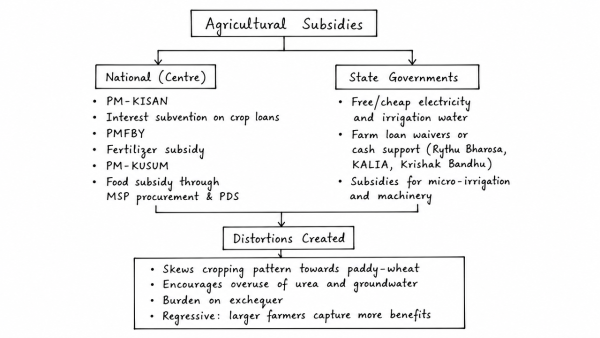
- National: PM-KISAN, interest subvention on crop loans, PMFBY, fertilizer subsidy, PM-KUSUM, and food subsidy through MSP procurement and PDS.
- State: free/cheap electricity and irrigation water, farm loan waivers or cash support such as Rythu Bharosa, KALIA, Krishak Bandhu, and subsidies for micro-irrigation and machinery.
However, the regime distorts cropping patterns toward paddy-wheat, encourages overuse of urea and groundwater, burdens finances, and is often regressive as larger farmers capture more benefits while tenant and marginal farmers remain under-covered; hence subsidies should shift from price/input distortion to targeted income support, efficient irrigation, soil health and investment in productivity.
Originally written on
August 28, 2026
and last modified on
September 7, 2026.