“Water resources are both an asset and a source of conflict in South Asia.” Examine this statement giving examples. (UPSC 2026)
Water resources in South Asia are a shared lifeline and a flashpoint. Major rivers such as the Indus, Ganga and Brahmaputra sustain irrigation, drinking water, fisheries, wetlands and hydropower for over 600 million people.
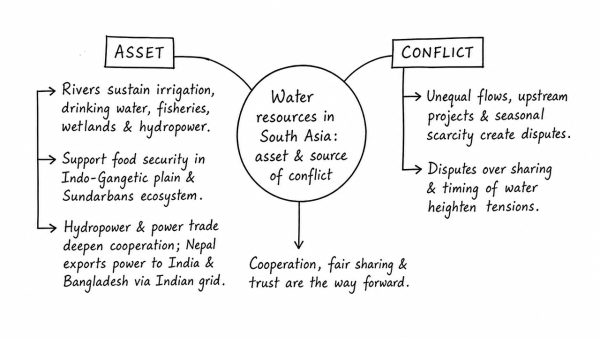
- Asset: Rivers support food security in the Indo-Gangetic plain and deltaic ecosystems like the Sundarbans.
- Asset: Hydropower and power trade can deepen cooperation; Nepal now exports electricity to India, and Nepalese power is also being transmitted to Bangladesh through the Indian grid.
- Conflict: Unequal flows, upstream projects and seasonal scarcity create disputes over sharing and timing of releases.
- Conflict: The Indus Waters Treaty faces strain, while the Teesta dispute remains unresolved and the Ganga treaty needs renewal.
- Conflict: China’s dams on the Yarlung Tsangpo and climate shocks in the Himalayas raise downstream fears.
Thus, water in South Asia is both an engine of growth and a source of strategic tension. Cooperative treaties, data sharing and basin-level planning are essential to turn competition into stable interdependence.
Originally written on
September 5, 2026
and last modified on
September 5, 2026.