Underline the significance of the landmark Chennai Declaration in shaping India’s policy on antimicrobial stewardship. How successfully has it influenced infection control protocols in private hospitals?
The Chennai Declaration gave India its first practical roadmap against antimicrobial resistance. It shifted the debate from concern to action by linking antibiotic stewardship, hospital infection control and laboratory strengthening.
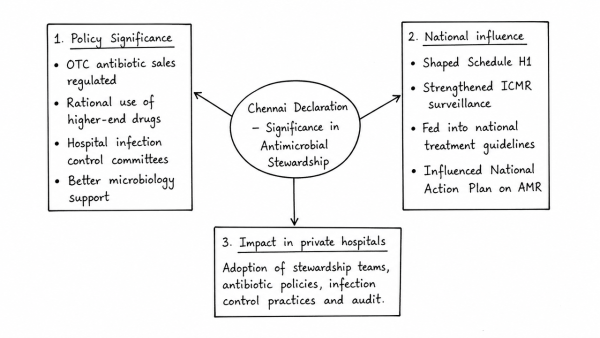
- Policy significance: It pushed regulation of over-the-counter antibiotic sales, rational use of higher-end drugs, hospital infection control committees and better microbiology support.
- National influence: It helped shape Schedule H1, strengthened the ICMR surveillance network, and fed into national treatment guidelines and the National Action Plan on AMR.
- Private hospitals: Its impact is visible in many tertiary private hospitals through stewardship committees, restricted use of reserve antibiotics, hand-hygiene protocols and microbial surveillance.
- Limits: Adoption is uneven. Many smaller private hospitals still lack trained staff, dedicated pharmacists, infectious disease experts and strict compliance systems.
Thus, the Declaration was a decisive catalyst for policy change, but its influence on private hospital infection control is only partly successful and needs stronger enforcement, training and accountability.
Originally written on
September 15, 2026
and last modified on
September 15, 2026.