“Tundra regions are ecologically fragile but economically important.” Examine this statement critically. (UPSC 2026)
Tundra regions, spread across high latitudes over permafrost, are extremely sensitive to warming yet valuable for energy, minerals and shipping. The statement is broadly correct, but development has high ecological costs.
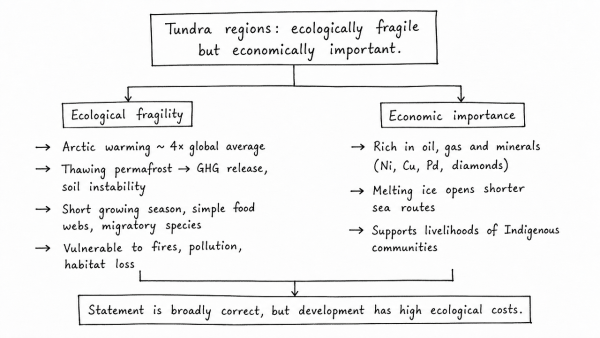
- Ecological fragility: Arctic warming, about four times the global average, is thawing permafrost, releasing greenhouse gases and destabilising soils. Short growing seasons, simple food webs and migratory species make tundra vulnerable to fires, pollution and habitat loss.
- Economic importance: Tundra contains oil, gas and minerals such as nickel, copper, palladium and diamonds. Melting ice is opening shorter sea routes and some fisheries, creating jobs and revenue.
However, extraction and infrastructure can damage permafrost, raise emissions and cause long-term ecological loss, so economic use must be tightly regulated and low-carbon.
Originally written on
September 5, 2026
and last modified on
September 5, 2026.