“Traditional bureaucratic structure and culture have hampered the process of socio-economic development in India.” Comment. (UPSC 2015)
Traditional bureaucracy has often slowed India’s socio-economic development by valuing procedure over results. Its rigid hierarchy, weak specialisation and risk-averse culture reduce the state’s ability to deliver quick, citizen-focused outcomes.
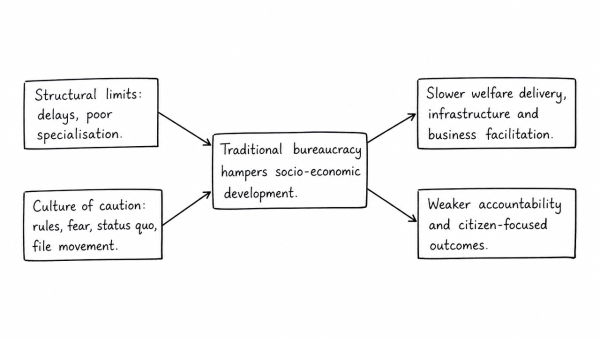
- Structural limits: Multi-layered files, frequent transfers and shortage of officers delay projects, weaken accountability and break continuity. Generalist administration also struggles in areas like digital governance, climate action and finance.
- Culture of caution: Excessive rule-bound working, fear of audit or vigilance action, and status quoism encourage “file movement” rather than problem-solving. This affects welfare delivery, infrastructure and business facilitation.
- Democratic safeguards: Protections under Article 311 and transfer controls are needed for neutrality, but when misused, they can shield inefficiency and frustrate reform.
- Positive change: Reforms such as Mission Karmayogi, e-governance, grievance redress platforms and delayering show a shift towards a more responsive state.
Thus, bureaucracy has been a drag when it became inward-looking and inflexible, but with capacity building, stable postings and outcome-oriented administration, it can become a driver of development.
Originally written on
August 30, 2026
and last modified on
August 30, 2026.