To what factors can the recent dramatic fall in equipment costs and tariff of solar energy be attributed? What implications does the trend have for the thermal power producers and the related industry? (UPSC 2015)
The sharp fall in solar equipment costs and tariffs is driven by a mix of global and domestic factors. Overcapacity in module manufacturing, especially in China, has pushed prices down, while newer technologies such as TOPCon and HJT have raised efficiency and cut cost per watt.
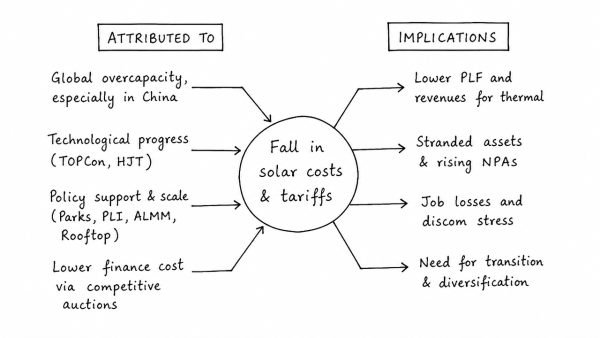
- Scale and policy support: Solar parks, PLI support, ALMM norms and large rooftop programmes have reduced land, evacuation and supply risks.
- Lower finance cost: Competitive reverse auctions and better lender comfort have reduced the cost of capital, which forms a large share of solar tariff.
- Economies of scale: Rapid capacity expansion has brought down balance-of-system and installation costs.
For thermal power producers, this trend means lower plant load factors, weaker revenues and pressure on returns. Coal plants may have to back down during the day, increasing wear and operating cost. The wider industry, including coal mining, transport and equipment suppliers, may face slower demand, though thermal power will still remain important for evening peaks, grid stability and backup power.
Originally written on
August 30, 2026
and last modified on
August 30, 2026.