To what extent, in your view, is the Parliament able to ensure accountability of the executive in India? (UPSC 2021)
Parliament does ensure accountability of the executive, but only partly. The Constitution makes the Council of Ministers collectively responsible to the Lok Sabha under Article 75(3), while financial control, questions and motions allow regular scrutiny.
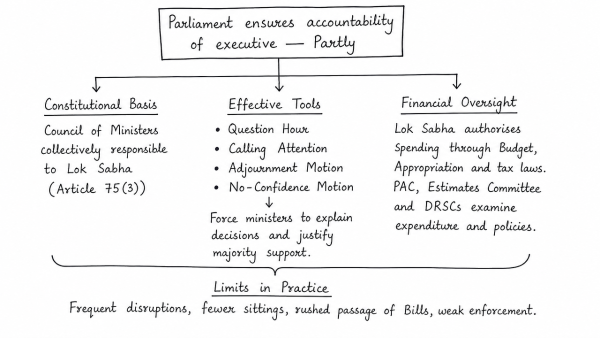
- Effective tools: Question Hour, Calling Attention, Adjournment Motion and No-Confidence Motion force ministers to explain decisions and justify majority support.
- Financial oversight: The Lok Sabha authorises spending through Budget, Appropriation and tax laws; PAC, Estimates Committee and DRSCs examine expenditure and policies in detail.
- Limits in practice: Frequent disruptions, fewer sittings, rushed passage of Bills and limited referral to committees reduce meaningful debate.
- Executive dominance: Anti-defection law, ordinance route and misuse of Money Bills weaken independent legislative scrutiny, especially in the Rajya Sabha.
Thus, Parliament remains the main constitutional check on the executive, but its real ability to ensure accountability is weakened by party discipline, poor time management and procedural bypasses. Stronger committee scrutiny, longer sittings and freer debate are needed to restore its oversight role.
Originally written on
September 2, 2026
and last modified on
September 2, 2026.