To what extent has globalization influenced the core of cultural diversity in India? Explain. (UPSC 2016)
Globalisation has influenced India’s cultural diversity both by widening exposure and by pressuring local identities. Its impact is deep, but not total: India has not become culturally uniform, though some traditions are under stress.
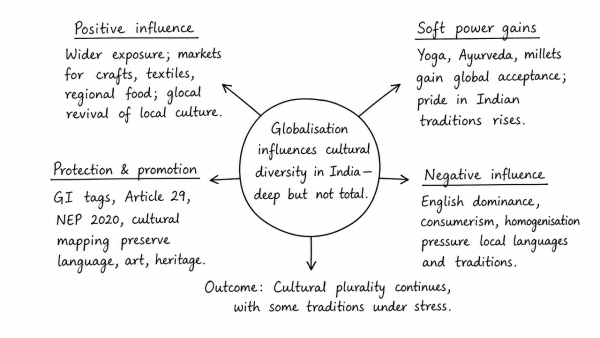
- Positive influence: It has expanded markets for crafts, textiles and regional food, and strengthened “glocal” revival of local culture.
- Protection and promotion: GI tags, Article 29, NEP 2020 and cultural mapping help preserve language, art and heritage.
- Soft power: Yoga, Ayurveda and millets have gained global acceptance, raising pride in Indian traditions.
- Negative influence: English dominance, migration, mass media and consumer culture have weakened many local languages, folk practices and community life.
- Threat of homogenisation: Standardised lifestyles, fast food and mass fashion often replace regional customs and seasonal habits.
Thus, globalisation has affected the core of cultural diversity in India to a considerable extent, especially in language and everyday practices. Yet India’s strong constitutional safeguards, cultural pluralism and local resilience continue to keep diversity alive.
Originally written on
August 30, 2026
and last modified on
August 30, 2026.