To enhance the quality of democracy in India the Election Commission of India has proposed electoral reforms in 2016. What are the suggested reforms and how far are they significant to make democracy successful? (UPSC 2017)
To improve the quality of democracy, the Election Commission of India in 2016 proposed a set of reforms aimed at cleaner elections, better candidate standards and stronger institutional independence. These suggestions tried to address money power, criminalisation, misuse of office and weak transparency in the electoral process.
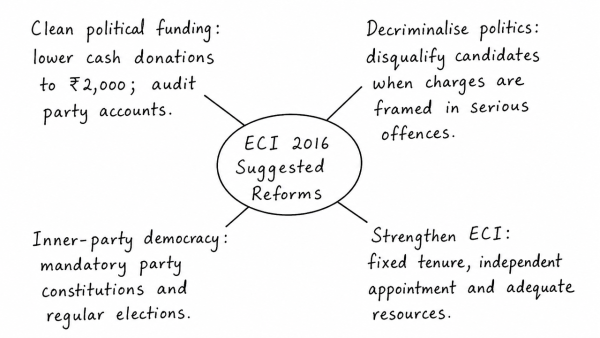
- Clean political funding: reduce anonymous cash donations from ₹20,000 to ₹2,000; make party accounts mandatory for audit by approved auditors; and bring all financial help to candidates within their legal expenditure limit.
- Decriminalise politics: disqualify candidates when charges are framed in serious offences carrying five years or more; make the ban on convicted persons permanent; and treat false affidavits as a corrupt practice and cognizable offence.
- Strengthen the ECI: give all Election Commissioners equal constitutional protection, create an independent secretariat with its own service rules, and charge ECI expenditure to the Consolidated Fund of India.
- Protect voter choice: use totaliser machines to hide booth-wise voting patterns, ban government advertisements six months before the end of the House, restrict a candidate to one constituency, and punish paid news as an electoral offence.
These reforms are highly significant because they strike at the main threats to democracy: money power, criminal influence, opaque campaigns and weak enforcement. They can improve fairness, reduce intimidation and restore public trust in elections.
However, reform of laws alone cannot make democracy successful. Strong implementation, speedy trials, political consensus and voter awareness are equally necessary. Still, the ECI’s proposals provide a practical roadmap for making Indian democracy more free, fair and accountable.